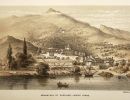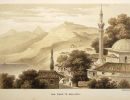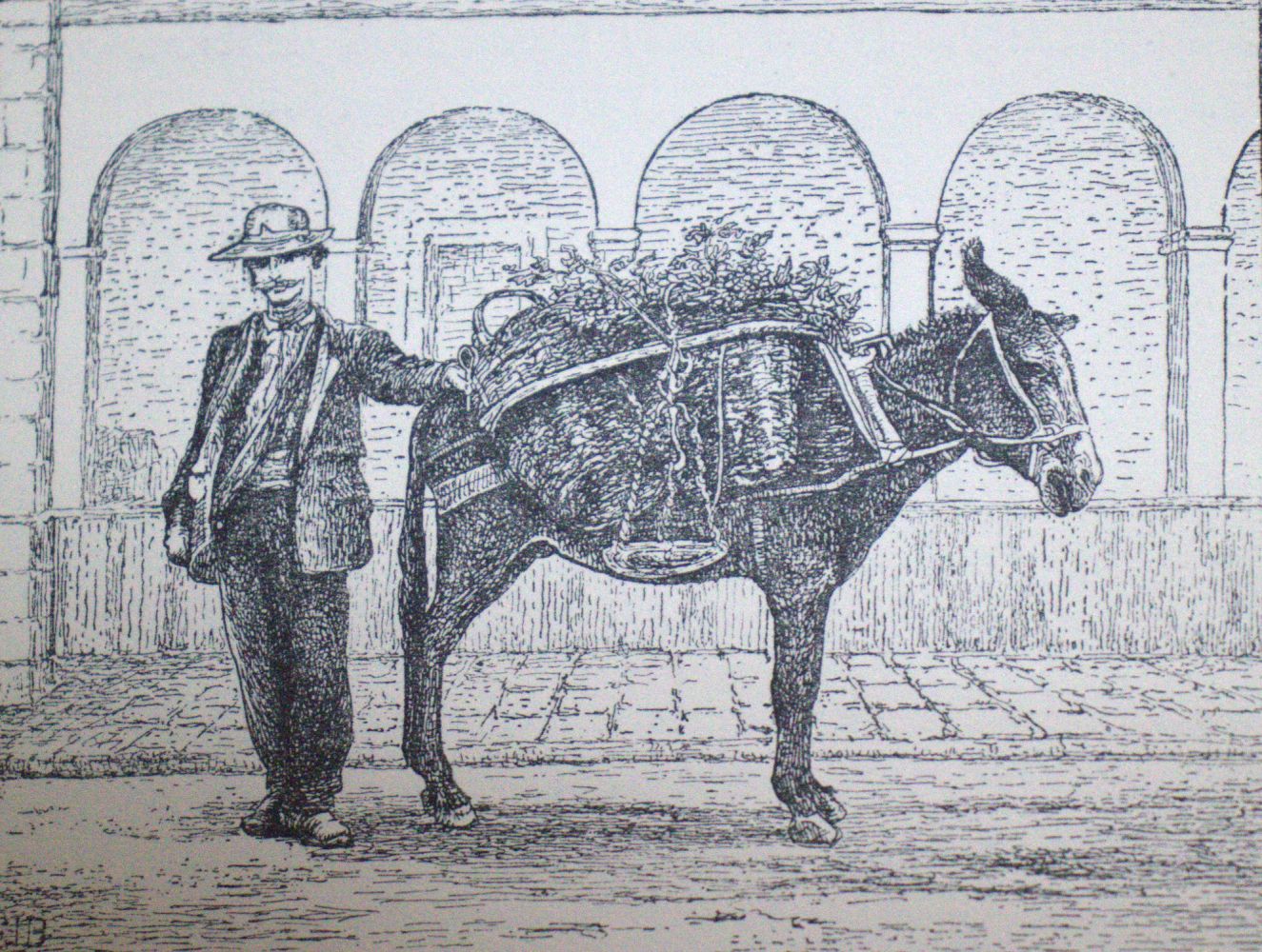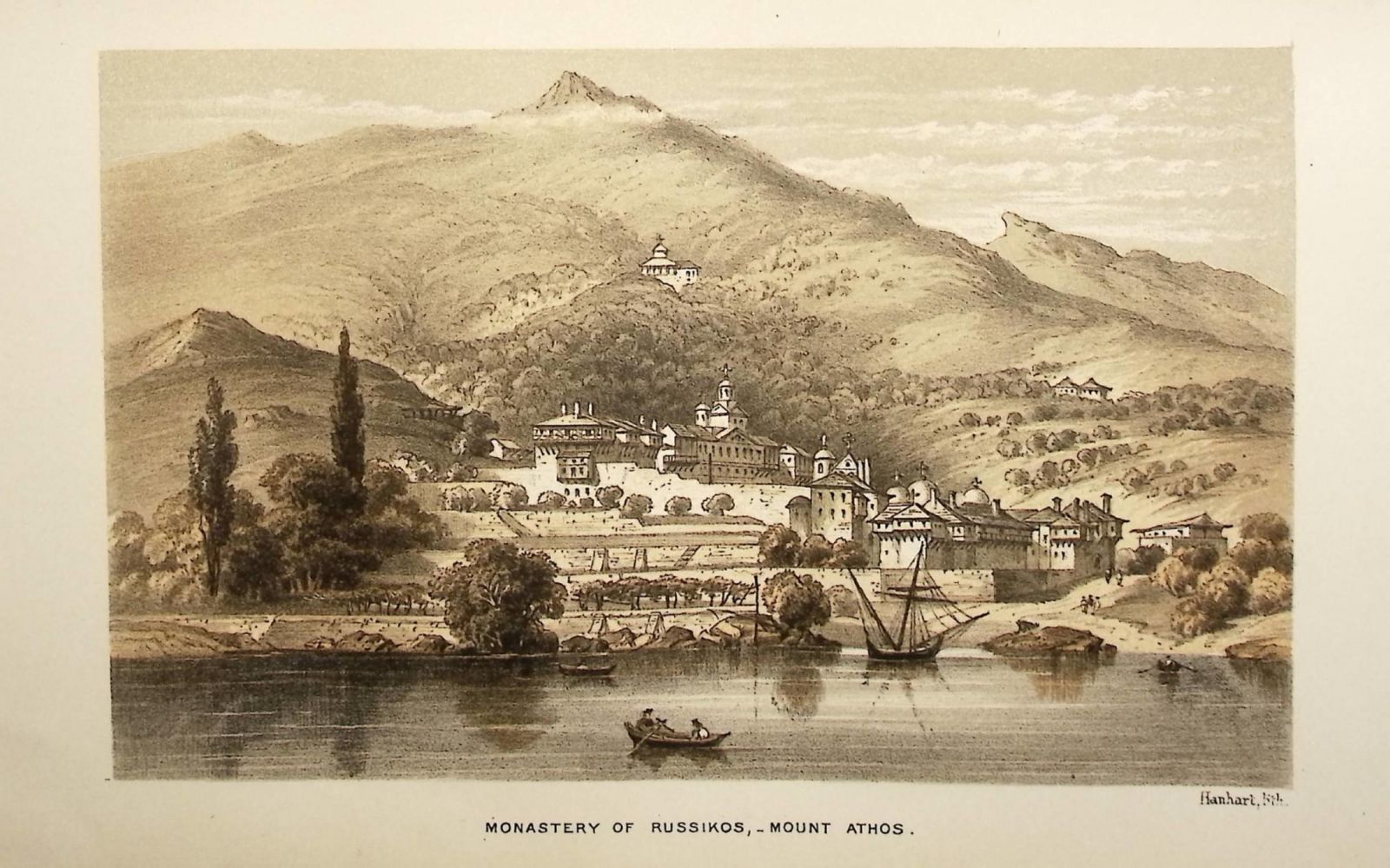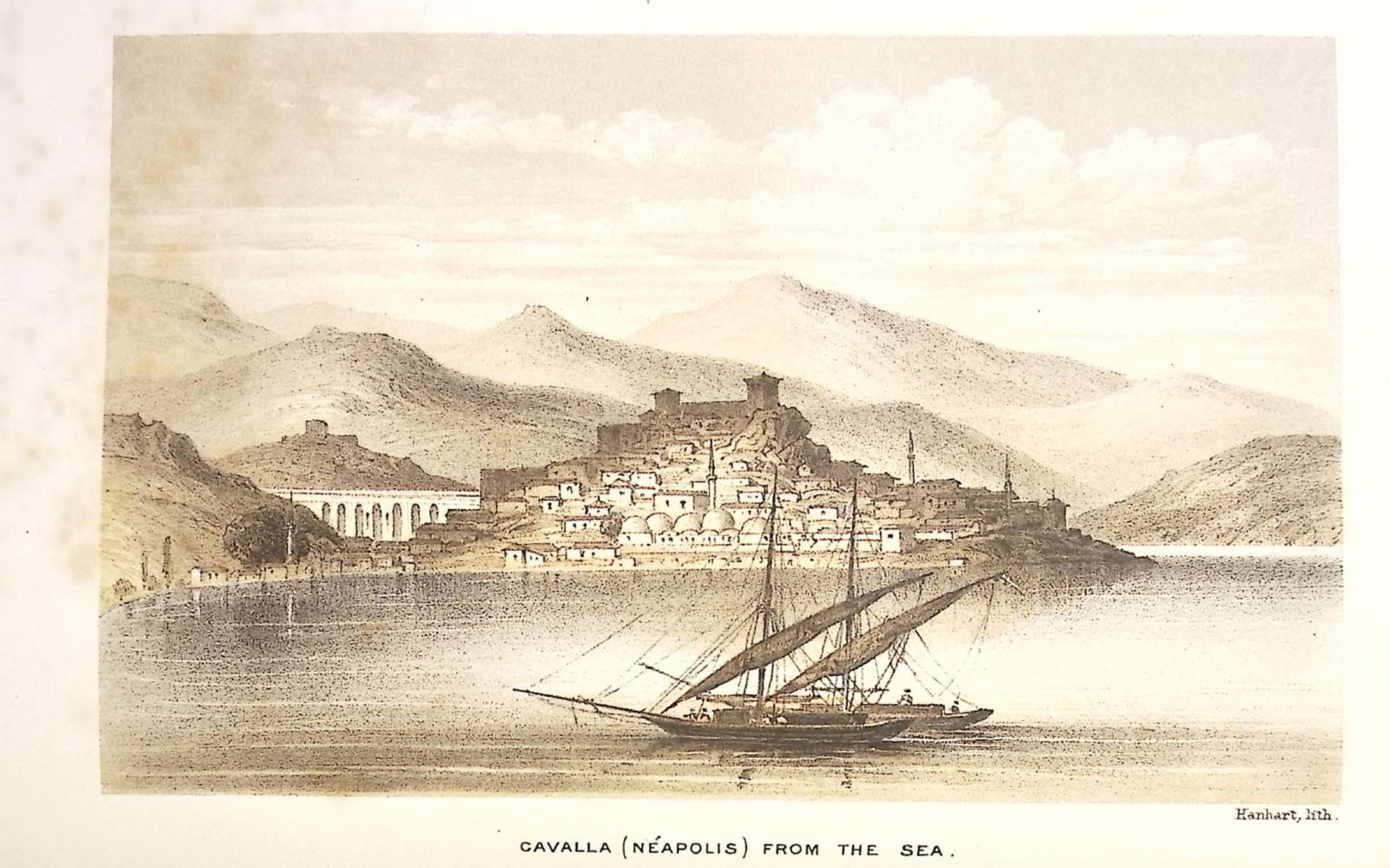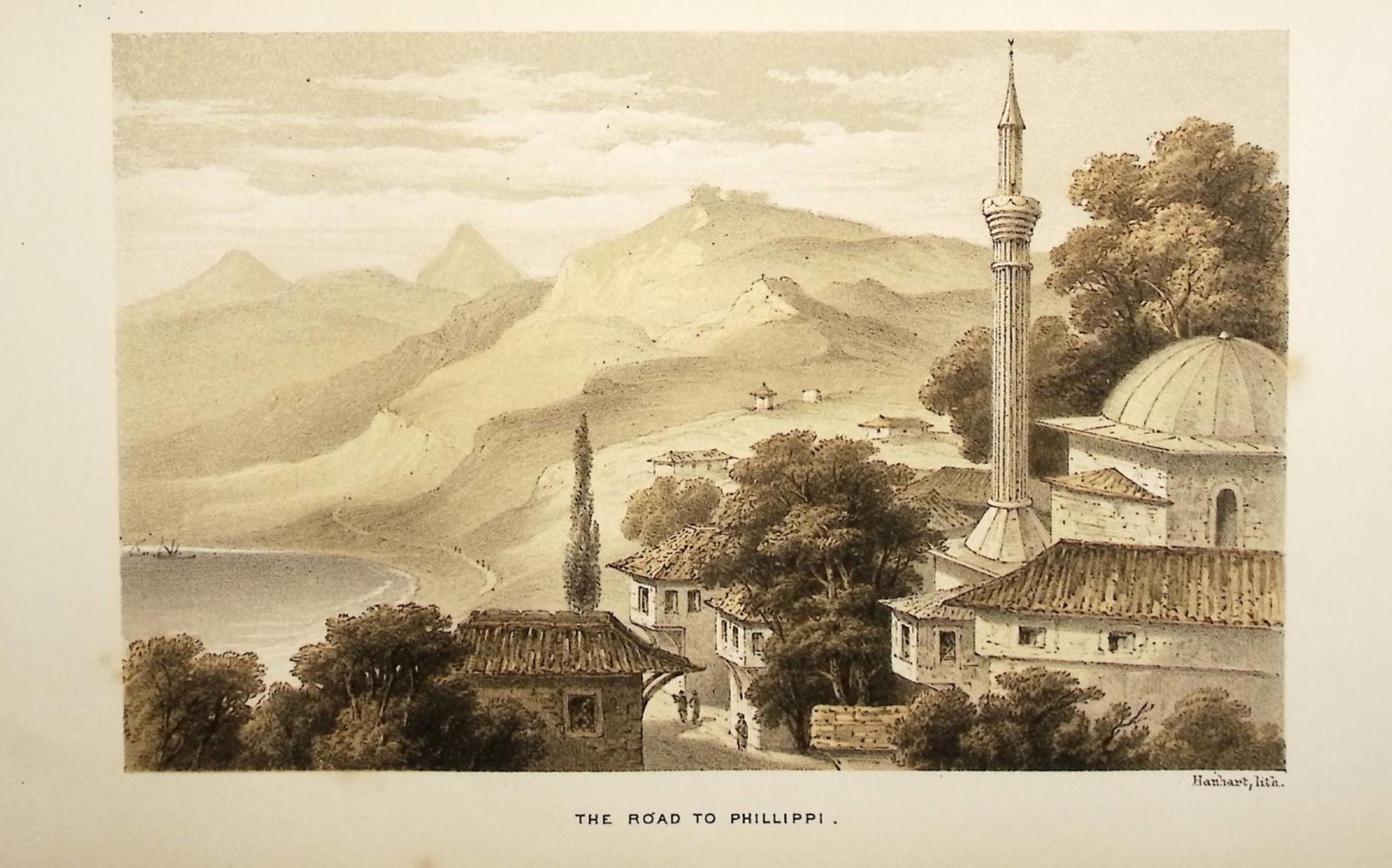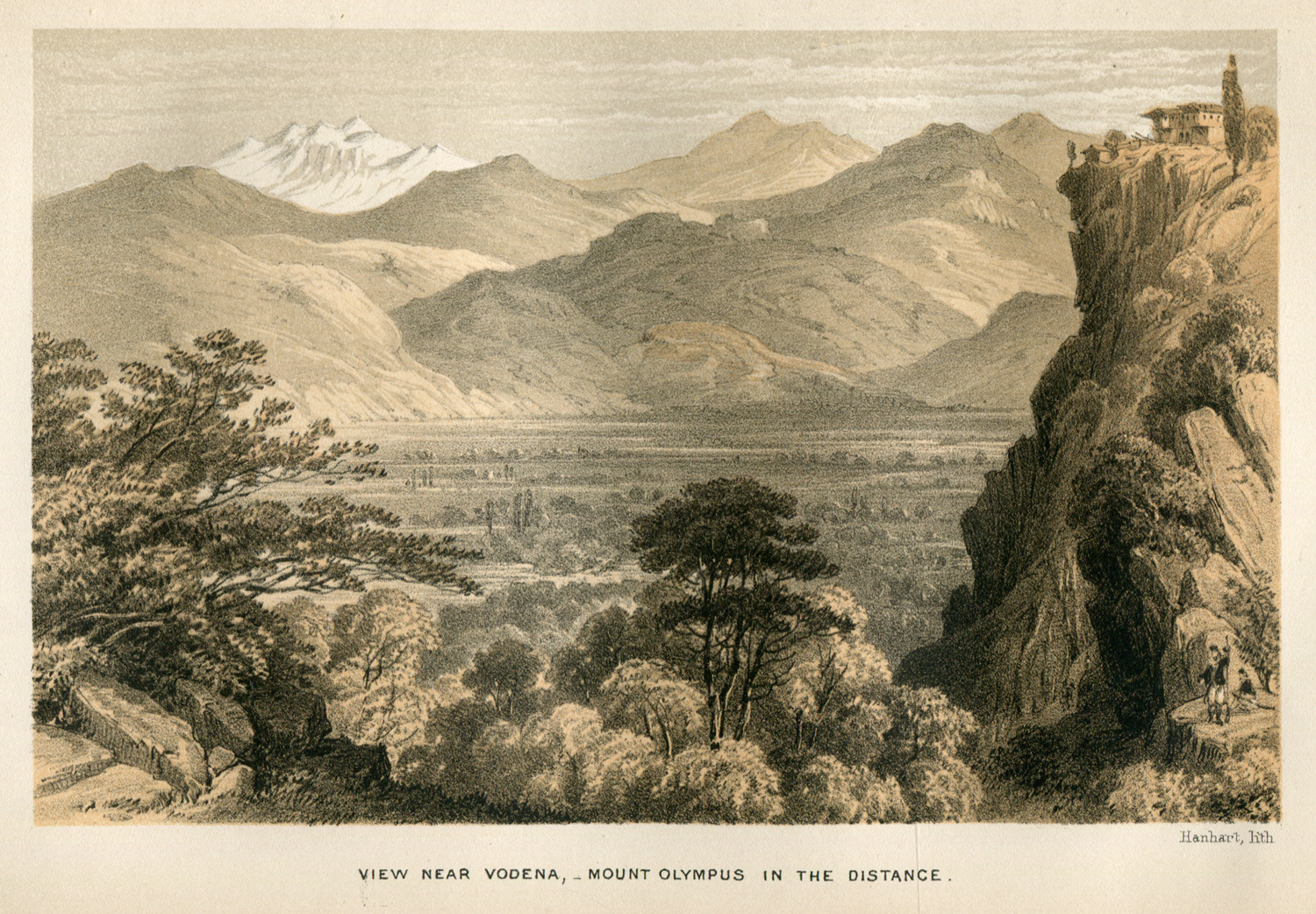
Mary Adelaide Walker, 'View Near Vodena Mount Olympus in the Distance,' Through Macedonia to the Albanian Lakes (1864), 66.
Women travelers were keen observers of the sites they visited and the landscapes they journeyed through. Often informed by ancient authors and other early travellers, they show great interest in antiquities and give detailed descriptions of the monuments and their historical contexts. Guided by great curiosity and sensibility, they are very perceptive towards the people they encounter and the modern cities (such as Athens, Ioannina, and Chania), although sometimes their views are reflections of the biases of their time. They offer a lively and vivid multisensorial commentary on everyday life, customs, eating habits, dress, and music. Simultaneously, they do not ignore the mundane, interjecting precious details of their journeys, such as lodgings, furniture, companions, transportation, and food. Their narratives are embellished by poetic and romantic descriptions of the natural landscapes. Many of the authors are talented artists, and use their creativity to illustrate their adventures.
Sites & Monuments
“Outside Athens the temple at Bassae is in better preservation than any other we saw in Greece… Situated high up in the hills the position of this temple is admirable and again wholly unique... thrown-down columns, marble fragments, rocks pitched upon rocks, stones upon stones, broken terraces, one or two straggling oaks struggling for existence... Certainly no place, before or since, has impressed me with such an intense sense of stupendous solitude.” – Isabel Armstrong, 1893 Two Roving Englishwomen in Greece, 64-5
“The few remaining pillars of the Temple of Jupiter Olympus, or rather supposed to be that which contained the statues of all the Gods, give one a very good idea of the incredible size of that temple... Nothing can exceed the magnitude of these enormous columns— all fluted of the Corinthian order.” – Elizabeth L. Craven, A Journey Through the Crimea to Constantinople (1789), 259
“We have it [the Acropolis by moonlight] all to ourselves... But the moon itself in the south seems a presence, a very all-pervading presence. She obliterates the untidy confusion of the chaotic ruins, she broadens out effects of light and shade, and leaves the four grand remnants of buildings the Propylaea, the Temple of Athena Nike, the Parthenon, and the Erectheion sole possessors of the ground.” – Emilie Isabel Russell Barrington, Through Greece and Dalmatia (1912), 69-70
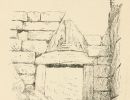
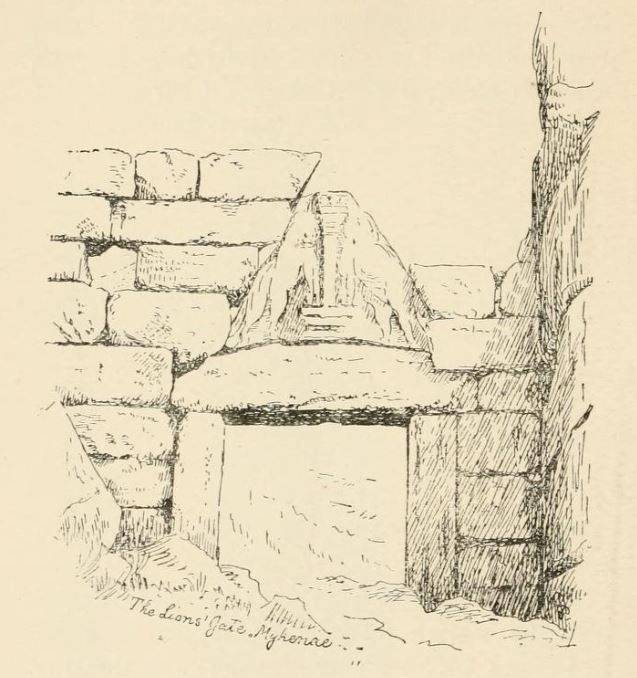
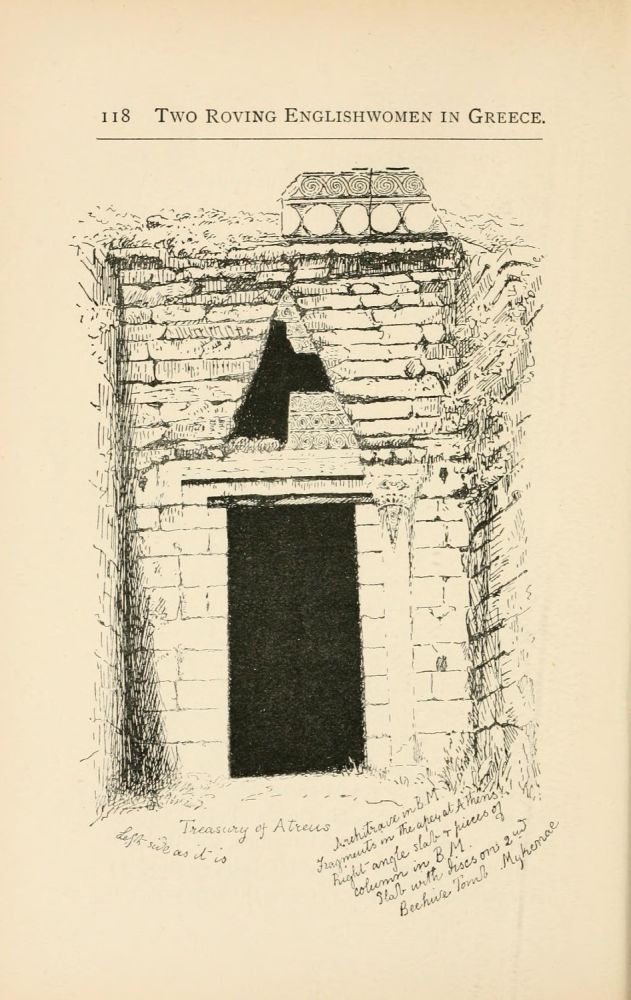
“A few paces more and a turn at right angles brought us to the bottom of the ramp, and we looked straight up to the celebrated Lions' Gate. The small guides with unusual animation cried out, "The lions, the lions!" and in my joy I howled with them in chorus.” – Isabel Armstrong, Two Roving Englishwomen in Greece (1893), 119-20
“All that is now left of Troy is the ground on which it stood; for, I am firmly persuaded, whatever pieces of antiquity may be found round it, are much more modern, and I think Strabo says the same thing. However there is some pleasure in seeing the valley where I imagined the famous duel of Menelaus and Paris had been fought, and where the greatest city in the world was situated.” – Mary Wortley Montagu, Turkish Embassy Letter (1763) vol. 3, 62
“The Temple of Minerva, in the citadel of Athens, was used by the Turks as a magazine for powder, which blowing up has flung down such a quantity of beautiful sculpture that I should be very happy to have permission to pick up the broken pieces on the ground – but, alas, Sir, I cannot even have a little finger or a toe.” – Elizabeth L. Craven, A Journey Through the Crimea to Constantinople (1789), 256
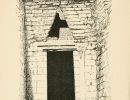
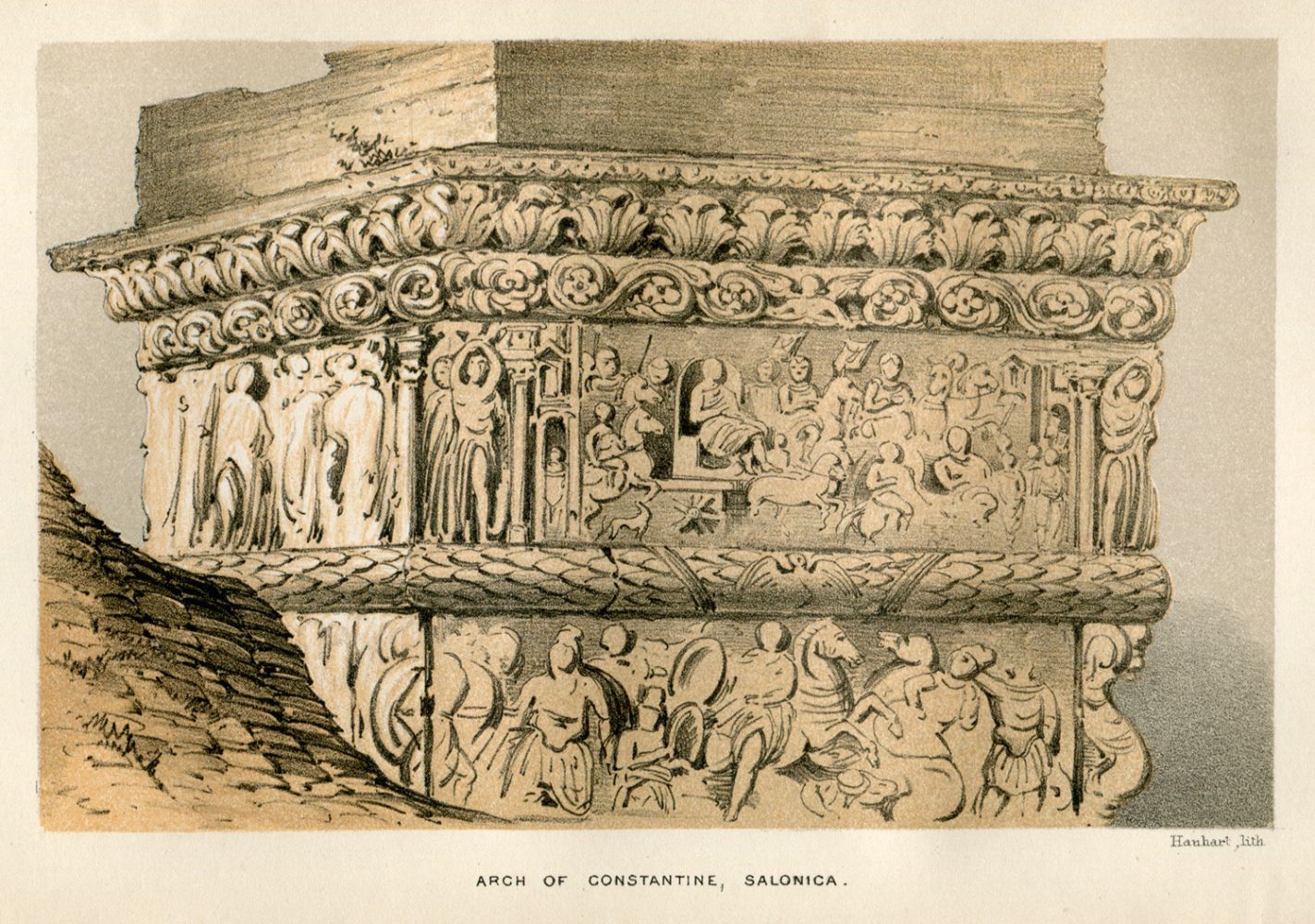
“Near the south-eastern extremity of the main street, a continuation of the old Via Egnatia, stands another triumphal arch [the Arch of Galerius at Thessaloniki]... It is in brick, faced with bas-reliefs in white marble, highly wrought, though not in the best style of art, representing a battle between Roman troops and some barbarian tribe, and a triumphal entry into a city.” – Mary Adelaide Walker Through Macedonia to the Albanian Lakes (1864), 49
Natural Landscapes
“It was so easy to understand what a religious people like the ancient Greeks must have felt as they traverse that long stretch of fertile plain, with those wedded mountains beckoning them on with snowy hands. The grace of Ossa appealing to their keen sense of beauty, the mystical cloud-enveloped Olympos precipitating sacred yearning into religious frenzy. Where in all Greece could have been found a more fitting home for the Immortal Gods?” – Isabel Armstrong, Two Roving Englishwomen in Greece (1893), 171-2
“We reach the beautiful white ruins [of Sounio], so very white against the blue sea below, the violet isles beyond. We go to the outer limit of the marble flooring of the temple, and look straight down into the sea below. What colors float round this coast of Greece, all faint in the light, yet so pure and distinct—amethyst, emerald, opal, agate hues, all mingling in the wavelets, and melting into the fields of vast sapphire blue beyond.” – Emilie Isabel Russell Barrington, Through Greece and Dalmatia (1912), 94-5
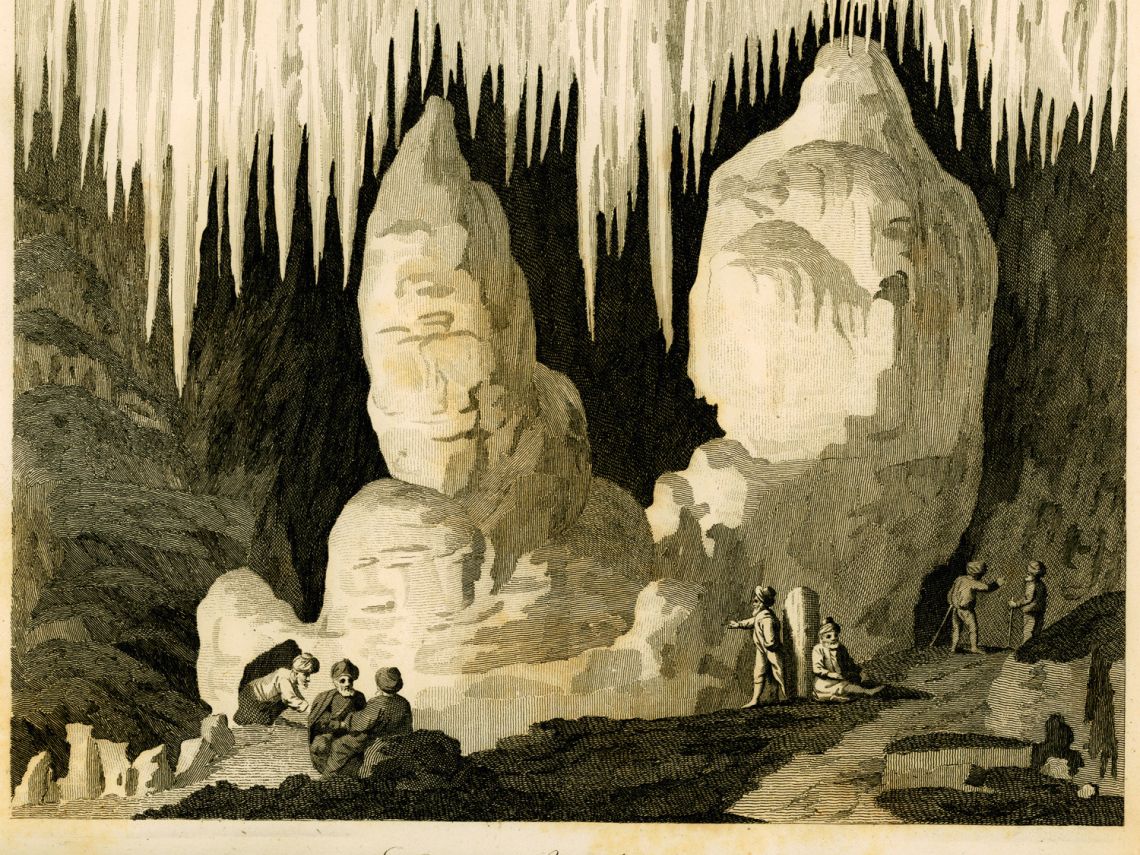
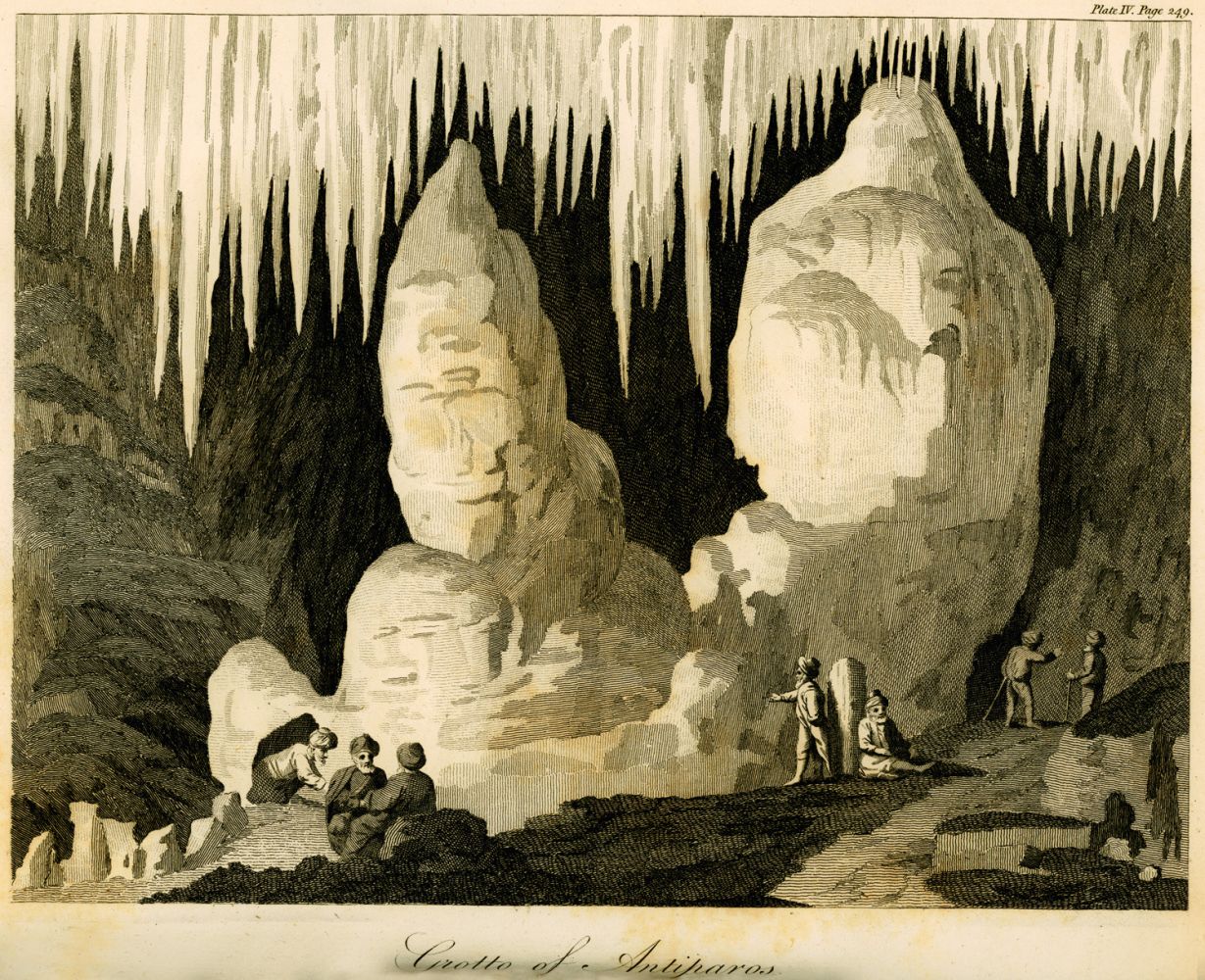
“Indeed it [the Cave of Antiparo] was a league distant from the shore, and we ascended constantly; turning suddenly to the left, we defended a little, and a scene truly romantic offered itself; a vaulted semi-circle formed by craggy rocks, some bearing the appearance of pillars... it required a good deal of courage and dexterity to proceed, sometimes I sat, and slid down small points of rock, which were the only support for hands or feet.” – Elizabeth L. Craven, A Journey Through the Crimea to Constantinople (1789), 244-48
Modern Cities
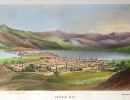
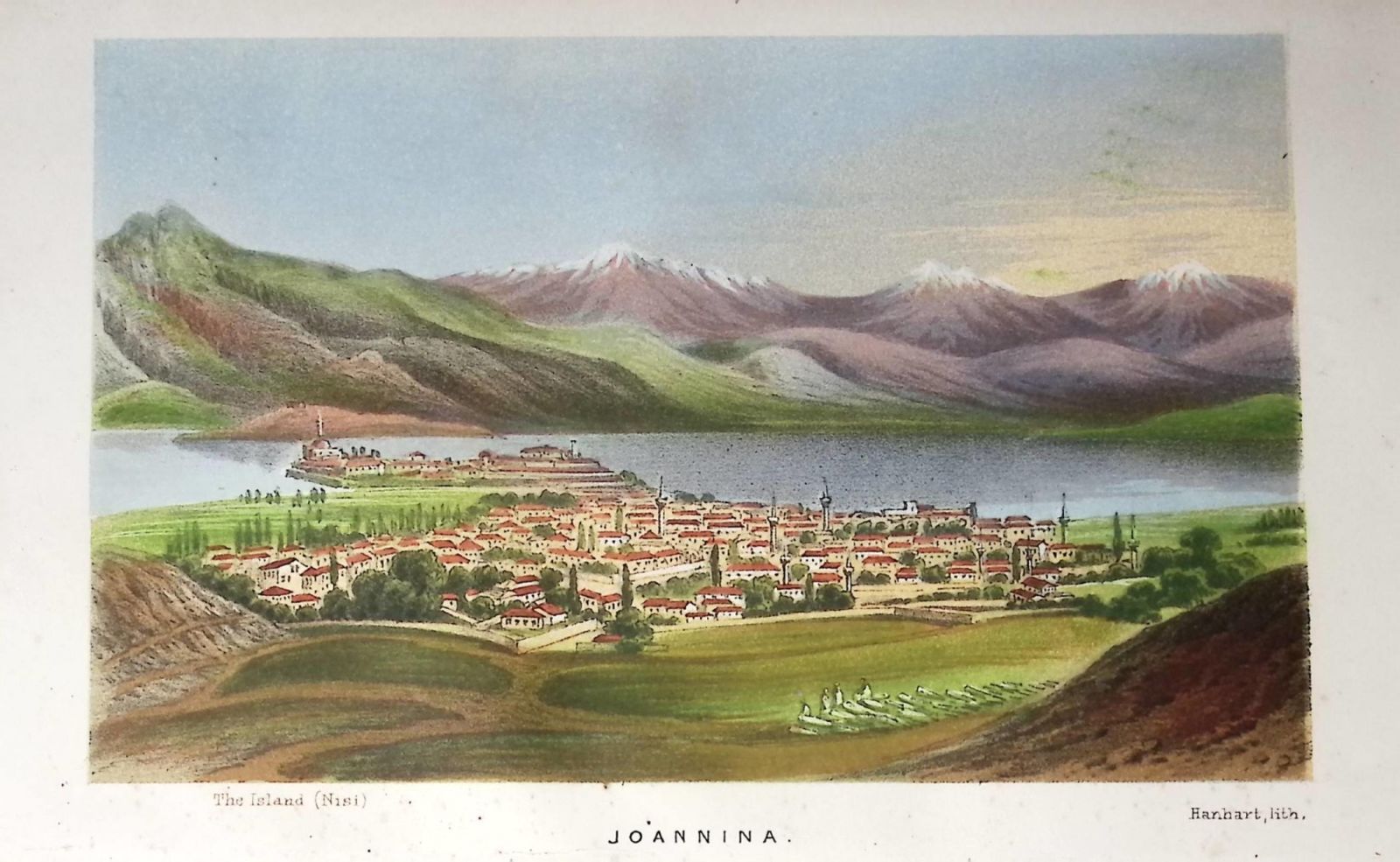
“The view at last, however, was not at all disappointing. The city [Ioannina], which is very white and (at a distance) marble-looking, is well shaped — a graceful bow advancing into the lake, and imbedded in the most brilliant verdure of meadows and rich gardens.” – Emily Ann Smythe, The Eastern Shores of the Adriatic in 1863: With a Visit to Montenegro (1864), 23
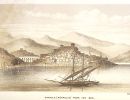
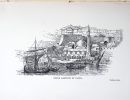
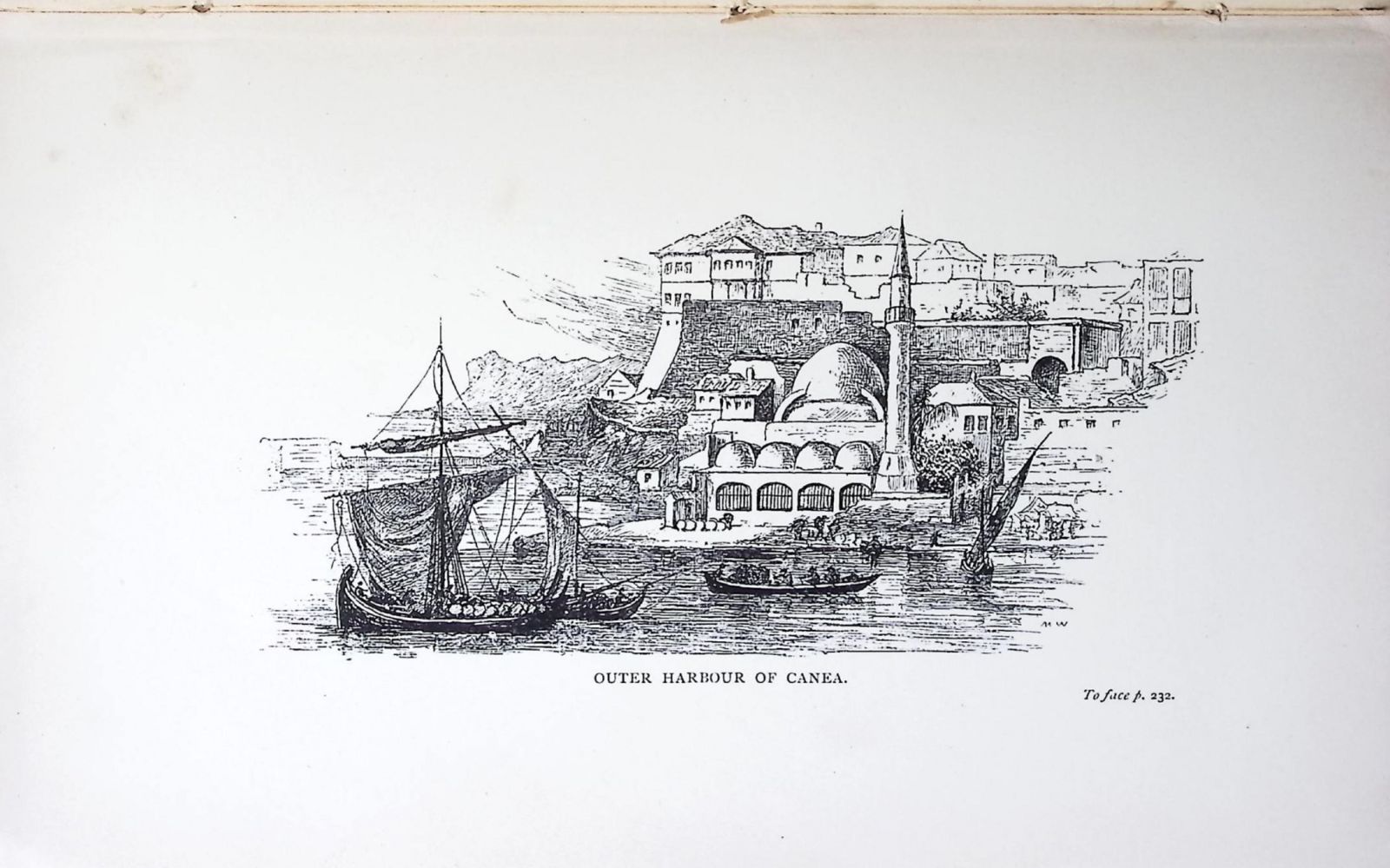
“What a picturesque scene! What a singular mingling of East and West does this port of Cania offer to the spectator! The immense vaulted ruins of the arsenal recall the vanished glories of Venetian galleys that once found shelter there; where the Lion of St. Mark - boldly sculptured on the wall of the great bastion - seems still to defy the dreamy East, with its golden sunlight, its palm trees, seen here and there above the battlements; the turbans, the veils, the languor, the neglect, the decay of all surrounding objects.”– Mary Adelaide Walker, Eastern Life and Scenery (1886), 270-1
“Moving on to the edge of the Acropolis, we look over the wall which crests the rock down into modern Athens. What a contrast! A howling wilderness of cafes, noise, and flickering lights. It might be the brewing of twenty revolutions going on, so great seems the turmoil.” – Emilie Isabel Russell Barrington, Through Greece and Dalmatia (1912), 74